
Here It Is, Dave Butler - How To Study The Gospel
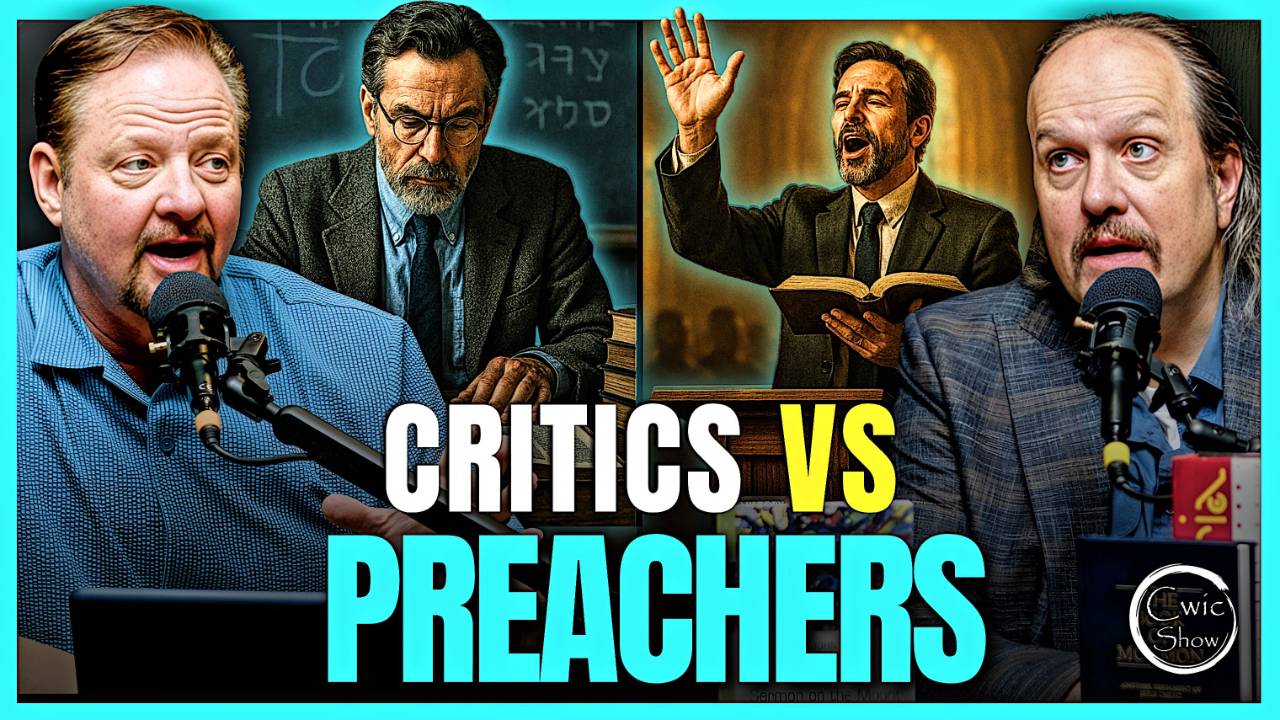
Two big “archetypes” of Bible commentary: Critics (Type A) vs Preachers (Type B). Type A is academic, puzzle-solving: authorship, dates, audiences, layers of editing. Type A can be written as if God is methodologically “out of scope”—even by believers. Tools on the critic side: languages, textual criticism, archaeology, history, sociology. Archaeology shifted from “confirming the Bible” to often complicating/contradicting surface readings. There’s a spectrum / hybrid zone (e.g., scholars who do serious work but keep discipleship in view). Dave proposes a “third model”: the Bible as a damaged record of a real encounter with God, not mere secular artifact. The Book of Mormon provides “other data” critics don’t have—an anchored point-of-view. The Book of Mormon is hyper-explicit about authors/editors (“Hi, my name is Mormon/Nephi…”) and record transmission. That explicitness gives “planks to stand on” when approaching a messy, anonymous biblical anthology. It also helps solve two problems: (1) Is the Bible solvable? (2) What can you responsibly take to the pulpit? Pulpit takeaway: you can preach from known voices/perspectives (Jacob, Nephi, Alma) without getting lost in source debates. Observation: most Saints read Type B; Type A feels dry, hard, “outside comfort zone,” and takes effort to digest. Engaging scholarly tools can illuminate both Bible and Book of Mormon more deeply.
Raw Transcript:
All right, this episode is brought to you by the Warriors of Tankham Men's Retreat this August 13th through 15th.
It's a three-day experience. This is something I'm so pumped about. It's something I've been wanting to put together for decades now. And finally,
this is coming to fruition. Let's be honest, there is a quiet crisis right now among men, right? We all know it. Culture has shifted quite dramatically,
right? It's leaving not just a crisis of strength with men, but a crisis of purpose. This weekend with Warriors of
Tiana is not a self-help weekend. This is a call to gospel centered masculinity. Modern life has rewired us
a little bit. It's telling us it's therapy over taos, therapy over direction and vision. We're going to turn that on its head during this
experience. And of course, there's going to be driving UTVs, shooting, fishing,
and hiking. Join myself, Greg Matson of Quick Media, along with an internationally acclaimed speaker and
best-selling author, Chad Heimus, whom Wall Street Journal called one of the 10 most inspirational people of the world in a transformational experience of
purpose and identity focused on the principles of the restored gospel and the words of the prophets. Click to find
out more. Spots are limited. I would love to see you there. Here we go.
So Dave, there are many ways to look at scripture. Oh yeah. To understand it, to interpret. Is that good? Is that bad? Yep.
Uh yeah, let's talk about that. Um I actually brought a couple of examples and I don't mean to throw either exemplar under the bus. They were just
both at the top of my stack. I have the the the east end of my dining room table to my wife's chagrin is about 3 ft high
in stacks of books because I know I need to quote all of them and what I'm working on now. So, uh it's it's my it's my to be cited stack. Let's talk about
Bible Bible commentaries, different ways people approach the Bible um as a way to maybe think about well, how should we
approach the Bible? Maybe as a part of a conversation. How do I approach scripture more generally? Mhm.
So, um I'm going to talk about sort of um two
archetypes or platonic types of commentary. All right. Um it it's not the case that that that
they're actually hermetically isolated from each other. You get commentaries that are a little of one and a little the other. Maybe there's a spectrum,
right? But but but these are two pretty good they're recognizable types. you get out there and start reading Bible commentaries, you're going to realize,
oh yeah, it tends to be type A or type B. Okay, so so let's talk about them. Uh we'll call this type A. Okay, I have
here, by the way, Hans Deerbett's excellent commentary on the sermon on the mount. This is a commentary on three chapters in Matthew and one chapter in Luke. Uh and it's like 800 pages long.
Uh great commentary. um sermon on the mount is is sort of the exemplar of type A who uh and let's let's give them a
name. Let's not call them type A. Let's call them uh these are these are commentaries by critics. Critic is a um I don't mean a value judgment by that
but but uh cretace is means a judge in Greek. Uh creteo is to judge. A critic is someone who is reading this
critically trying to make judgments on the text. Okay. Okay. Now who are they in real life? They don't call themselves critics.
They're they're university professors is who they mostly are. Although um they may be university professor like people.
So you may see u you know the editor of a a Bible archaeology magazine, right?
Or other sort of professor adjacent white collar intellectuals. You may see you may see even uh sort of in in
independent researchers who are just just writers writing books like this.
Now, this the the commentaries of the critics,
how do they see we're talking about the Bible, at least for the minute, for the moment. How do they see the Bible? Well,
the the basic perception that has driven what we'll call critical commentary for the last 200 years is that the Bible may not be what it seems on the surface.
It may not be written when it claims to have been written. It may not be written by who claims to have written it. It may
not be actually written for the audience it claims to be written for. Right? Um
also uh uh critical uh it may not be what it appears in that there may be multiple layers of transmission or editing. So what seems to be, you know,
a a prophecy may have originated as something else, an oral message, right? Maybe it was a prophecy,
but it was it was spoken and it was repeated verbally for a long time. And uh maybe it was a play or a folk tale and it got turned into a story set in,
you know, the Solomon's court or something. and um and and criticism is trying to unravel the Bible as a
gigantic puzzle, right? As as is not even one puzzle, but is maybe hundreds, maybe thousands of little puzzles,
right? And I'm trying to figure out,
well, what's the real history of the people who wrote the Bible? What's the real history of the audiences the Bible
was written for? I'm trying to figure out uh what did it mean to those people when it was when it was written, right?
How was it how has it changed over time?
What are the societies look like in which it was written? Right? These are kind the kinds of questions I'm asking.
And and you may think, well, Dave, where is God in all this? Great question.
I think that um you could be a complete atheist and write this kind of biblical scholarship.
Several of them are. And some of them are make no bones about it are in in fact unbelievers. Right? It is a subject of academic study.
And um some people I think um do believe and and and there's there is always the
possibility, you know, when you're looking at the academic study of the Bible that somebody's confessional beliefs, right, that the person's
Christianity or Judaism may sort of color the judgments they're making,
right? That's just sort of part of the landscape to that of that academic debate. I think I think a person who believed in God and I think if you went
to one of them and said hey you know look you've written this commentary on Leviticus or whatever you know what about God and the miraculous and they
say well listen look I believe in God but I can't control God experimentally I can't you know I can't I can't prove or
disprove the miraculous so I have to write a commentary as if there is no God to um you know to use um natural
processes and natural analyses uh to uh to to explain what happened and
how and how the text has arrived to us as it has. Right? In other words, I may believe in God, but I I can't this is not a book in which anyone's going to
bear his testimony and say and this is important because Jesus Christ is the son of God.
It's academic. It's not in there, right? It's this is an academic subject. You might see a very similar work written about like the history of Athens or something, the Pelpeneisian War, right?
By the way,
uh uh are are there uh what kinds of tools do they use? Well, man, language
really matters, right? Um, archaeology uh, has come to matter over time.
archaeology, biblical archaeology has really in a 100 years plus has really um it itself has changed and it has also
really changed the conversation. So biblical archaeology started out as amateurs who would kind of just they they were believers, they were clergymen
and they were digging around and and they were really looking for they wouldn't have said this but they were really looking for ruins that
illustrated what they already thought about the Bible. Mhm.
Aha. I found this great gate. A a gate is mentioned over here in First Kings 10. This is if it's not the gate, which
it might be, it it must have looked like this. Mhm.
Right. Um and and that can elucidate the Bible text sometimes, right? Like, oh,
this is what this is what the city gate looks like. So when Proverbs talks about the woman's husband sitting in the gate,
like this is the kind of thing we should imagine and the the court happens here and right that's that's useful. But but over time it became then
professionalized and and um academicized.
I don't know if that's a word, but it'll do. Um and and then and then the archaeologists started noticing that
their data didn't match the biblical text in a lot of ways. And this and this started to push the conversation on Bible criticism into a space that says,
"Hey man, not all of the facts as presented in the Bible are historically accurate facts." and and so uh it really
moved archaeology moved scholarship in in the direction of saying we need to re understand again when these different
texts were written and by whom and what they're really trying to accomplish right and and again these are many of
these people are believers some of them are not right they're trying to keep God out of it they're understanding an academic subject.
Now um so that's type A.
So, type B.
I'm going to call these preachers. Who writes type B commentaries? And I'm not picking on these guys. I'm not saying they're bad. This is a different kind of commentary. Okay? It might not be
immediately Amazon won't distinguish them. If it if it sees that you like Bible stuff, it will just start showing you both of these. Okay? Doesn't know the difference.
So, who writes these are pastors.
Sometimes they're professors, but they tend to be professors at sort of Bible colleges or seminaries.
Okay. Um tends uh uh uh tends to be um now now over here, right?
the the concept of the Bible that scholarship is a is dealing with has has really for 200 years plus is look this
is a collection of texts from different times and places by people who disagree with each other the texts don't always
agree with each other right but if we if we read them carefully we can learn interesting things about history and about the different religions of Israel.
Okay,
this is Platonically, archetypically tends to see the Bible as the inherent word of God.
Or if it's not the inherent word of God, it's something really close.
It's assuming that the reader is a believer.
Yes. It assumes the reader is a believer. It assumes that the Bible as we have it is what God wanted us to have.
Right. Even if they're willing to say, "Listen, there were probably mistakes in here. There are contradictions." Even if they go so far
as to say, "Well, people in one group who put the Bible together maybe killed people in the other group who were part of putting the Bible together." That the
view is that's not a problem. God wanted us to have the book as it is.
And so, what is the purpose of my writing a commentary? It's not to explore the history. It's not to explore
the multiple religions of ancient Israel. It's not to explore archaeology, anthropology, sociology.
It's to tell you things to help you be a better disciple. Okay? I want be very clear. It's a spiritual book.
It's a spiritual book. I am not trying to say good book, bad book.
These commentaries are out there.
Very frequently you will see in preacher commentaries little nuggets like they usually know Greek and some Hebrew and there will be good things
that they have gotten out of scholarship that they share in simplified form to help you understand a passage.
What would you put NT Wright into?
Well it's a really good question. Like I said earlier these are archetypes. Real people land somewhere on a spectrum.
Someone like N. T. Wright or someone like John Meier has serious academic scholarship but also cares about contemporary discipleship.
So they sit somewhere in between.
Well, there's a presupposition that the Bible is the word of God.
Yeah, but I'm willing to study it academically.
Yes. And it's valuable.
So this gets us into the alternative to these two.
Do these guys use some of the same tools? Yes, but not nearly to the same extent.
They are more likely to use ministerial tools — parables, personal stories, practical application, journaling questions, testimony moments.
For example: a preacher commentary might say, “Let me tell you about someone I knew whose life changed after encountering Christ.”
That will never appear in a critical commentary.
Again, that doesn't mean those books have no value.
But seeing these archetypes raises an interesting question for believers — especially someone like me who is a member of the Church of Jesus Christ of Latter-day Saints.
Which kind should I write?
How should a believer approach scripture?
Are there Latter-day Saints writing these kinds of books?
Sure. There are.
But there are far more writing preacher-type books.
They sell better.
Academic books sometimes sell only a few hundred copies and are priced for libraries.
Meanwhile devotional books sell in Christian bookstores and Deseret Book.
They are easier to write too.
You don’t need deep language training in Hebrew, Greek, Egyptian, Akkadian, and other ancient languages.
So what do we do as believers?
One side treats the Bible as the inerrant word of God.
The other treats it as a purely historical document.
But I think there’s a third model.
As Latter-day Saints we already know the Bible is not inerrant.
Joseph Smith taught repeatedly that plain and precious things were removed.
The Book of Mormon says this too.
So what is the Bible?
I think the Bible is a tangled puzzle built around a real encounter with God.
Israel wasn’t a random society.
They were a people interacting with God across centuries.
The Bible preserves that encounter — but in damaged form.
Different factions argued with each other.
Some writers were right.
Some were wrong.
But the encounter with God was real.
Why do I believe that?
Because we have the Book of Mormon.
The Book of Mormon anchors the story.
It tells us God wanted us to have both records — the Bible for background, and the Book of Mormon to clarify it.
The Book of Mormon helps interpret the Bible.
So the Bible becomes a damaged record of Israel’s experience with God — but still a valuable one.
Languages and archaeology matter.
But we cannot write God out of the discussion.
That’s where Latter-day Saints approach scripture differently.
We search for what God was doing in the story.
And the Book of Mormon helps solve two problems created by modern scholarship.
First, it gives us a concrete viewpoint inside ancient Israel.
The editors identify themselves — Nephi, Mormon, Moroni.
Second, it gives us something we can actually teach from the pulpit.
Instead of debating authorship and redaction theories, we can teach clearly from Nephi, Alma, Jacob, and others.
Their voices are explicit.
So while critical scholarship can provide interesting insights — what Greg called “candy” — the spiritual center for Latter-day Saints remains the Book of Mormon.
It gives us grounding, perspective, and something meaningful to teach.
And while learning languages or engaging scholarship can deepen understanding, ultimately the purpose is the same:
To draw closer to God and avoid the mistakes ancient Israel made.
That’s the goal.
Dave, appreciate your time.
Always a pleasure, Greg. Thanks for having me.

"I Take This Every Day!"
Learn more about why I accepted Cardio Miracle as a sponsor and why I take it every day!
- Greg Matsen

Stay Connected With New Articles & All Things Cwic!

Cwic Audio Player
All of the Cwic Media podcast episodes on one page!
Recent Posts

