
MIT Professor Shot Dead - Nuno Loureiro - New LDS Approved Bible Translations
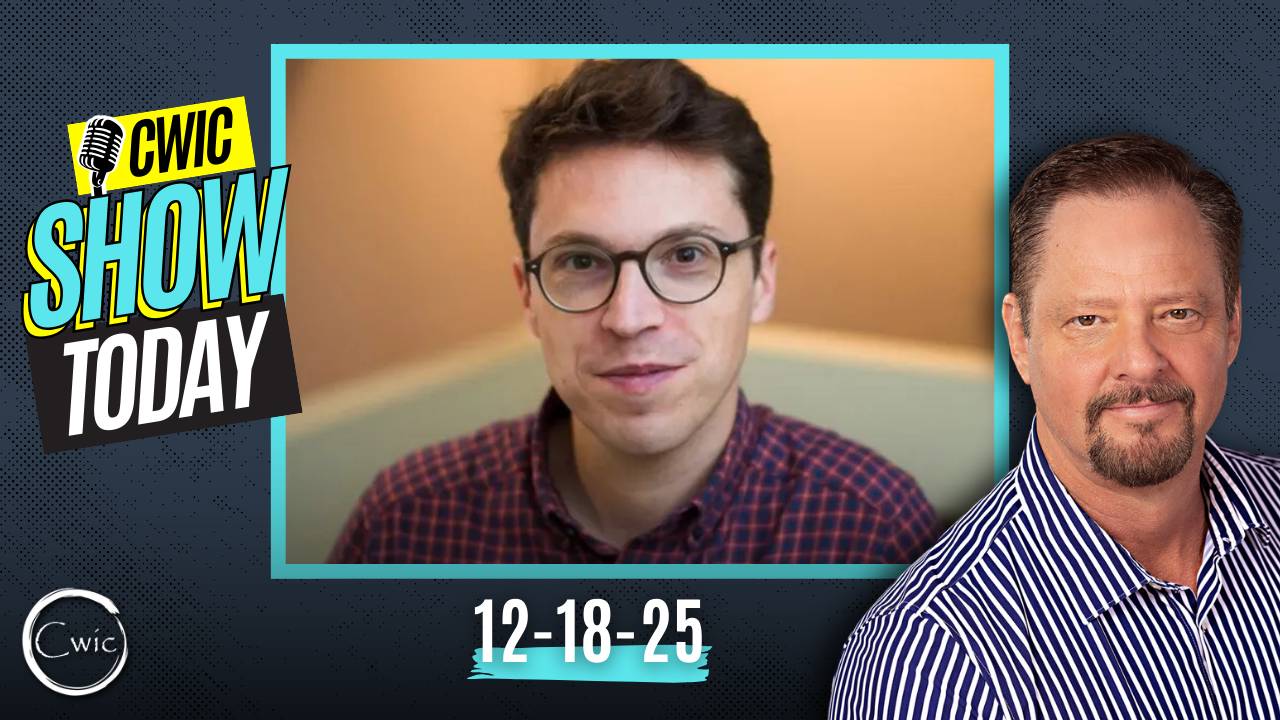
Nuno Loureiro was not a random MIT professor but a leading physicist working on low-cost energy. While his death may be a random act, many are already saying this was a political act. New Bible translations are "approved" and encouraged by the LDS church for study.
Raw Transcript
Welcome to Quick Show today. Today is
December 18th, 2025. We are talking
about the shooting this morning of Nuno
Laero, a professor at MIT and director
of the Plasma Science and Fusion Center.
His
assassination perhaps or his murder at
least because this has already been
ruled as a gunshot homicide is putting a
lot of waves through the scientific
community, the political community
because he was in charge of something
very important which is cheap energy. So
I want to go over that. Also a movie
that I my wife and I remember well
called The Saint. is very similar to
this movie that was put out. This is
kind of like a movie script, but
unfortunately is very real. We're also
going to talk about the new scripture
change and recommendation suggestions by
the church on the Bible, which is very
interesting. I want to talk about why
it's good and some other issues that I
think are important for us to remember
in terms of the King James version Bible
with the rest of the standard works.
They're basically in also in Jacobian
English just as the King James version
Bible is. So there there there are some
things I want to talk about there that I
think we don't want to forget in in
regards to the King James version. First
though, I want to talk about the three
continents tour coming up in April 2026.
The dates on this are April
28th through May 9th. Three continents
in one trip. We're going to hit Turkey,
Greece, the Greek Isles, and the
continent of AC Africa in Cairo, Egypt.
We're going to see three different very
different cultures. We'll be in Turkey,
in Istanbul. We'll go to Ephesus. And
we're going to go to the places also in
Greece where we have Paul, John, the
Apostle John where they taught uh and
and walked. And of course in Cairo,
we'll be ending. And then of course in
Cairo or just outside of Cairo, we'll be
going to Memphis, which is where
Abraham,
Joseph of Egypt, and Moses all walked.
Fascinating sites, amazing education on
this trip. Go to quickdia.com up at the
top, trips and events, and scroll down
to three continents to find out more.
Here we go.
All right. Professor Nuno Lero. I I hope
I'm saying that right. Nuno Lero. He is
uh Portuguese director of the plasma
science infusion center at MIT. He's
dead. Found shot in his home in
Brooklyn, Massachusetts. The authorities
have now confirmed the cause of death
was a homicide. The investigation is
ongoing. No motive has been announced.
No suspect has been named yet. These are
the facts that we have on the ground
currently.
Now, who was Professor Laerero, right?
He's not just an academic. He's not just
a teacher. He is the leading he is the
world's leading mind in plasma physics,
specifically in the most stubborn, most
dangerous problem standing between
humanity and controlled fusion energy.
And that is the focus on magnetized
plasma dynamics. We're not going to get
into the specific We're not going to get
into the specifics of this uh too much,
but basically he was trying to control
heat. Now, a couple decades ago, there
was a movie with Val Kilmer called The
Saint, and this is exactly what this was
about. This is a movie script, but
unfortunately, very real. Val Kilmer is
helping a woman who has discovered the
process of cold fusion, and the whole
world is trying to get a hold of it. And
as we all know, whether we're talking
about electricity or we're talking about
uh uh oil, the world is always in a
competitive push for control of energy.
Whether you're one of the superpowers or
not, who are you going to align with?
How are you going to get the energy? And
this fusion promises to be not free, but
cheap. Some people will say, well, it's
the governments, right? We're talking
about China. We're talking about Russia,
maybe Iran that would be interested in
stopping this type of research. And
there's no question Professor Lero would
be a target. Now, maybe it was just a
random home invasion. We don't know the
specifics yet, but when you have a
certain profile, you have a certain
work, when people find out what you're
working on and the ramifications
worldwide of global power, it's
certainly not beyond the pale to believe
that other countries or individuals or
groups could be involved with a murder
like this. Now, going back to the
magnetized plasma dynamics, this was
about how to confine matter that was
hotter than the sun, right? how to keep
it from tearing itself apart in that
heat and how to prevent the chaos
resulting from this from winning out
with this energy. You have to control it
in some way. And of course, this is all
about physics. Hydrogen as an example,
you would heat it until atoms no longer
exist. You create plasma, a violent,
unstable,
relentless material, and you try to hold
it in place with magnetic fields that
are strong enough to fight
to almost turn gravity upside down.
That's what he's working on, right? He
specialized in what's called turbulence,
which is the point where all the order
fails, right? Where the the heat just
takes over. And he had simulations that
would show how the chaos of this heat,
right, would happen, how to restrain it,
prevent it from happening in the first
place. So he's not, you know, obviously
cheating the laws of nature here, but he
but he's using the laws of nature, he's
using physics to control the heat. Now,
what does this produce if it if it can
be replicated over and over and this
heat can be controlled? It's not free
energy, but it's very cheap energy, very
efficient energy. And that's the work
there is efficiency in that energy. This
requires fuel. It requires a massive
input of energy and machines that cost
billions of dollars to make this happen.
But if net positive fusion does become
available, accessible,
producible in quantity, right, the
entire world changes, right? Obviously
oil changes, economies based on that oil
change, gas changes, coal, geopolitics
would completely change. It's maybe
important to note that professor It's
maybe important to note that professor
Lero had recently received the
presidential early career award, which
is one of the highest scientific honors
you can get. He had recently been made
director of MIT's plasma science and
fusion center. Now again, I think it's
important to understand we don't know
why yet why this happened, why this
murder happened. Is it random? Is it ran
a random act? Is it a burglar? Uh the
daughter was there apparently a
14-year-old daughter was there, saw the
perpetrator, was unharmed. But we know
that a man working on the very frontier
of humanity's energy future was killed
in his home.
If this turns out to be more than just a
random act of violence,
it will be interesting to see if we find
out who the characters involved are, if
there is more than one. All right, now
over to the scriptures. Here we can see
in the church's newsroom the headline,
new guidance on Bible translations for
Latter-day Saints. Of course, there are
several translations that have been
available. We've been discouraged pretty
much right through the culture through
Salt Lake to use other translations than
the King James version. And there are
good reasons for this, right? Before we
we go into the release here, the press
release on this, why why would there be
good reasons for this? We're number one,
we are a single entity. We're a single
church with a hierarchal structure. And
so, it's good to have everybody on the
same page. we can quote scripture to
each other and know exactly where to go
find that and what it says and exactly
how it's worded because we're all using
the exact same translation. That's the
benefit.
That's kind of an important thing I
think right now. ability to use these
other translations where even though it
says here that the handbook notes that
some may benefit from translations that
are doctrinally clear and also easier to
understand. Well, that last part there
easier to understand. Look, water runs
downhill. And so I can tell you having
been someone who has studied other
translations and used other translations
at times to understand understand
scripture,
this is it's a no-brainer to see that
the floodgates will open on this and
that Latter-day Saints will start using
other translations over the King James
version. The benefit of this is again
they're going to it's going to seem
clearer to them. in the 1830s when
Joseph Smith is,
you know, looking at the King James
version as the best uh outside of the
German version, I think he he said, but
as King James version is the best
translation to use uh for the Bible, he
was in a world where that language was
still being used. You were still tied
somewhat to that language. I mean,
you're only a little over 200 years away
from when the King James version was
produced. A lot of people had the
previous version, the Geneva Bible at
the time of Joseph Smith. That's the
Bible that most of the the pilgrims had.
But language changes. go back and I do
this kind of as a nerdy thing, but I'll
go back and I'll read old English going
back into the previous to Middle
English, which is when you get all the
Latin influence that comes in from the
Normans and and from the Catholic Church
in the 11th century, more in the 11th
century AD, right? Previous to that, you
get really into this old English, which
is much more Germanic. It is uh
interesting to read. It's kind of fun to
read. It's fun to learn how to how to
pronounce some of the strange looking
vowels and and consonants that are in
the language and to try and figure out
and and see what is the ethmology, the
DNA of a certain word that we still use
today. Quick is an example of this,
right? CWIC
CWIC is an old English word prior to
Middle English. Later on, you get into
using a Q with this. Jacobian English in
the King James version uses the word we
use today with a Q. Q U I C K. Quick.
Back then in old English, it had a
little bit of a different connotation
than it does today, though. Quick, we
usually the first thing we think of is
something fast. But back then, quick
CWIC in old English meant more alive and
intelligent,
quick of mind, so to speak, or quick of
the body, or we'll see terminology like
his spirit was quickened in the King
James version of the Bible. That's a
little closer to what you'd get going
toward Old English, alive and
intelligent.
So, there's no doubt that as you go into
these new translations, newer
translations, that you're going to get
something that is a lot more I mean,
some of them are ridiculous, you know,
it's almost like slang to some degree.
It it's it seems that way when you
compare it to something like the King
James version, but something like I I
love the NIV, for example, right? The
NIV is something that I will look toward
toward often and and see how it says
something that might be a little clunky
to my understanding, my modern mind in
the King James version. And we're going
to see that more and more because it's
just easier to understand it for a lot
of people. For most people, it's going
to be more pleasant to read from a
different version. Let's go back here to
the press release that's written here.
says, "The handbook notes that some may
benefit from translations that are
doctrinally clear and also easier to
understand."
Right? It's hard to read something that
is now 400 plus years old because
language changes so much. The latest
wave of updates, it says, to the general
handbook serving in the Church of Jesus
Christ of Latter-day Saints, includes an
adjustment to a portion about additions
and translations of the Holy Bible. The
handbook notes that generally members
should use a preferred or church
published edition of the Bible in church
classes and meetings. Okay. So, in other
words, we'll still have some type of uh
if we're if we're looking at if we're
doing this in our meetings, then this
goes back to the point I was making
about being on the same page with verses
and when we're when we're reading
scripture. So, if we're going through
this next year and we're going into the
Old Testament,
then people will probably mostly be
using the Gospel Library app or their
uh uh physical book of the Bible that
they're using. Not everybody, but
they'll be using this in a way that is
okay, we're all on the same page. We can
read along and understand this with each
other. I think that that will still be
used, but outside of the meetings and
let's say within the meeting, let's look
at a scenario here, right? You're going,
you're in a gospel doctrine class and
you're reading from, you know, Genesis,
whatever, chapter 1, chapter 2, at the
very beginning of next year in January
and people have the Gospel Library app
and and people are someone is asked to
read to the class verses, you know, 1-6
or something like that. And then what
are you going to get? Well, of course,
what you'll get is a little bit more of
a discussion on things because someone's
going to raise their hand and say,
"Well, in the NIV version, as I'm
following along here, that will happen
even though it says they prefer that you
use the same the church produced
material from the gospel library and and
their own printing of of the King James
version of the Bible." But people say,
"Here's how it says this, and this is
now how I understand this a little bit
better because of what the NIV says as
an example."
So that that's going to be a a new
phenomena in the church. Now, if that
happens already, I've had gospel
doctrine teachers that have used
different versions of the of the Bible,
translations of the Bible in the past.
Sometimes people are like, "Whoa, this
is getting way too loose." and you know,
but I've always enjoyed that there's
been a little bit more of an
understanding from a different
translation that most people will
understand better. Now, this is an
interesting point that the release says.
It says, "The adjusted handbook section
also points to examples of English Bible
translations that members can consider
as they seek to better understand the
teachings of the Hebrew Bible in the New
Testament." This is based off of age is
is what they use here. So, if you're
younger, here are some very easy much
easier uh uh versions to to read. And
then as you get older, here's a
different version that might be better
for you. Uh Elder Renland said the
following. The King James version is
beautiful and powerful, but for some it
can be difficult to understand.
Okay, so that's that's what they're
trying to do. You're trying to get the
best of both worlds, it looks like to
me, right? where where you are you are
saying, "Okay, for your own study, you
might be better off with something like
the NIV or or even something that's just
a little bit different like the New King
James Version." And and what that will
do is help you understand and maybe make
it more pleasant for you to read. Do you
guys read scriptures on a regular basis?
You're following Come Follow Me. It
might be a lot more pleasant and a
different experience if you're going
beyond the traditional King James
version of the Bible. It's funny because
for me who studied scriptures an awful
lot, I look back at their
recommendations here on age and it says
ages 11 to 13 use the NIV as an example.
So I guess that's where my mind is is,
you know, I'm like junior high age, you
know, uh prepubescent in my
understanding of the scriptures, I
suppose.
Lastly, I want to bring up something
else and that's about the additional
standard works that we have and and how
this is going to work with using
different scriptures. Uh, obviously the
what what Joseph Smith did in
translating the Book of Mormon was put
that into a Jacobian English into the
King James version. So, we read it very
similarly in the Book of Mormon. We
could read today
uh something that is, say, for example,
the NIV. I wonder if we'll ever see
that. That's kind of tough because
you're you're going beyond Joseph Smith.
So, I don't know if that'll ever happen.
Um, but we and it's different from the
Bible, right? Because we don't believe
that the Bible was translated by
prophets as an example. There there's
not a direct line there uh with that
translation. Although we can say that
maybe there was some inspiration that
that was involved. But with the Doctrine
of Covenants, the Book of Mormon, the
Pearl of Great Price, these things are
written in in more in a Jacobian English
style. And that is different, right? So,
we're going to look at that. We're going
to have this very different view of of
the Bible. It's going to read easier.
And then we're going to come back to the
other three standard works. And they're
going to still be in that Jacobian
English. And so, that's going to be a
little bit different. And and
especially, and this is the one thing I
think that we don't want to lose in in
moving beyond the King James version of
the Bible is going through Isaiah in the
Book of Mormon. It's my belief. Gospel
by Greg here that as we understand
Isaiah better as we understand
the the words of Isaiah which we don't
we just don't right we don't we don't
try and we need to maybe the NIV or
another version of the Bible will help
us to move through that however
you have in the Book of Mormon those
sections that are not quite but close to
word for word from the King James
version Bible
and in those Isaiah chapters in the Book
of Mormon. And so what I hope is is that
we don't lose something. I think that as
we start to learn more about Isaiah
Isaiah and we see certain things in the
Book of Isaiah in the King James version
in the Book of Mormon, I hope we're not
losing something that we're getting out
of say a different version of a
translation of the Old Testament and and
having those equal, right? where we're
currently we're reading the Old
Testament in the King James version.
We're reading Isaiah here. We study the
we study Isaiah, the Book of Isaiah in
King James, the King James version and
translation and then apply it to the
Isaiah chapters in the Book of Mormon
where I think that there is a rubric,
right, that that is going to unlock a
number of things about especially first
and second Nephi, but really about the
entire Book of Mormon. My concern is
that connection in language and that's
going to change. And so I just hope it's
not a stumbling block for us uh in in
understanding Isaiah in the Book of
Mormon because I think that is a real
key for us to really understanding the
Book of Mormon better. Have a great day.
I'm off to Utah today for a couple of
days going to go see Jacob Hansen in his
debate plus other several meetings that
I have. So, we'll be off from Quick Show
today for a couple of days. Have a great
weekend.

"I Take This Every Day!"
Learn more about why I accepted Cardio Miracle as a sponsor and why I take it every day!
- Greg Matsen

Stay Connected With New Articles & All Things Cwic!

Cwic Audio Player
All of the Cwic Media podcast episodes on one page!
Recent Posts

