
Parents Are Tired Of Paying For Their Kids To Lose Testimonies - feat. New SVU President, Aaron Hale
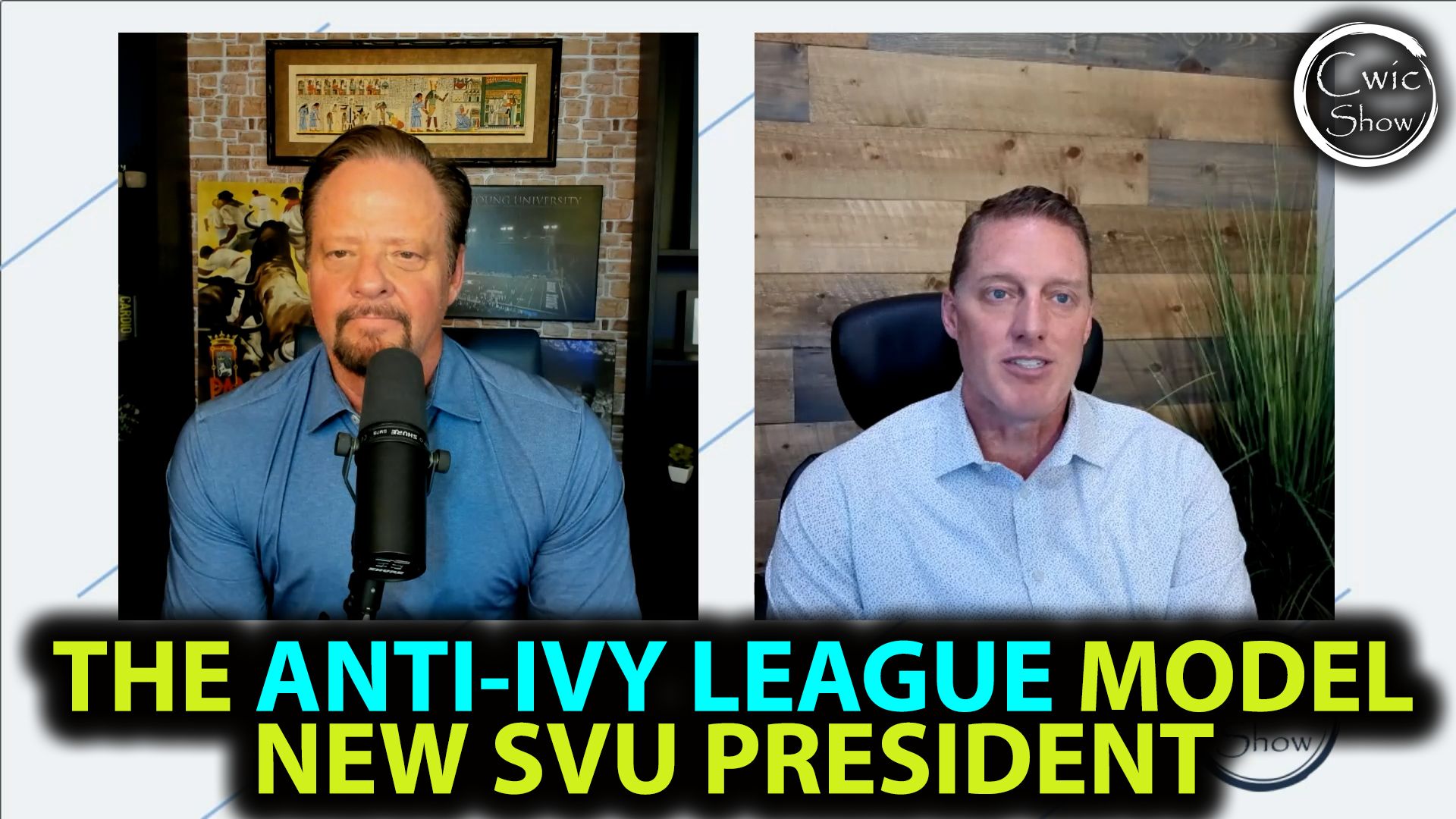
Aaron Hale is the new President at the University of Southern Virginia (SVU) He believes in an education that has been lost in America. Why are faiht-based universities growing while secular universities are in decline? The "Anti-Ivy League Model - teach classical learning in small classes through faith and critical thinking. What's up with Standardized Testing? Also, what parents should know before sending their kids off to college.
Raw Transcript:
Parents are tired of sending their kids off to universities, paying for it, and having them lose their testimonies. Why
are faith-based universities growing while secular universities are in decline? In this episode, I bring on
Aaron Hail, the new president of Southern Virginia University, who I know, who has a vision for SVU and
education as a whole. He asks the question, "Is secular college failing young adults?" and promotes an anti-Iv
model of education that's focused on classical learning, small classes, faith, and critical thinking. All of
these things seem to have been carved out from most universities. We also talk about what parents should know before they send their kids off to university.
This episode is brought to you by the Alaska Frontier Cruise coming September 5th through 12th with myself, my wife,
and Elaine and Steve Dalton. We'll be cruising up and down the California coast, enjoying the sea life, the
wildlife, going out on great excursions, eating together, talking together, and enjoying the beauty of the Alaska
coastline. To find out more, go to quickdia.com cwicdia.com to the top to trips and events and
scroll down to Alaska Frontier. I would love to spend time with you. Here's President Aaron Hail.
[music]
All right. So, President Hail, there's been a lot of news about standardized testing recently. During the COVID years, we kind of went away from it
going into uh uh into college, you know, the the requirements that everybody was looking for. We softened everything
quite a bit. But recently, we've had a really an about face on this. You've got elite universities such as Harvard, Yale
just announced they're going back to the standardized testing. Dartmouth, Brown, MIT, Penn, Stanford, they have all
reinstated standardized testing. And now the UC professors, there's 800 that are demanding that they return to standardized testing. What are your
thoughts on standardized testing? Is it important? And and why do we have the the back and forth on this?
Yeah, it is an important predictor, an important measure. The reason they're moving back to it is because they realize that it is a pretty good proxy for how well people will succeed at the
university level. Um, the other thing that they have realized is that it's actually an amazing tool for those in
lower socioeconomic status to get into college because it's a way for them to prove that they do have that knowledge and that skill set and allows them to to
leapfrog kind of above what they might otherwise be able to access because of the high school they came from and that sort of thing. Um, but it really, you
know, it is it is a tool. It's a narrow snapshot in time. It's how well did you perform on that day on that series of questions. Um, and so it it has its
place, but it's not the beall and endall.
So why do you think they went away from it?
I think they went away from it because they thought it was hurting minority students and preventing their access to it because they don't have, you know, I I shouldn't actually say minority, lower
socioeconomic students because they don't have the access to test prep and that sort of thing that might allow them to score higher on those tests.
And that's probably true though, isn't it?
It is. But it it is true that they don't have the test prep but at the same time they also don't have other ways to prove their ability level and so this was the
the easiest way for many of them to prove that we can succeed at the college level and so by taking it away you actually hinder those who they are most trying to help.
So do you think that with the about face on this that this will this trend will continue most for the most part that there will be standardized testing and
and being involved in have you been involved in K to2? Yeah. Okay. Being involved with K to2 and preparing students for college.
Are is that a a focus that should be in place for that testing? I mean, should there be counseling available for this?
Are they uh should there be a focus in the academic rigor and and and uh uh framework for the testing?
Yeah, it it has a place. you know, we K12 education, we've been doing standardized testing for decades. It allows parents to compare um
on a pretty even keel one school to the next, how their students are performing.
But even within our own school network, we see that those test scores move dramatically based on the area we're in.
Our our South Chandler campus score super well because we're surrounded by high socio economic students. You know, our Lavine campus scores well compared
to all the other schools in the area. um but it just doesn't score well compared to our Jailer campus because of the lower socioeconomic uh setting. So it
really is you have to compare it with those other schools who are in your small area to make to see see those relative gains between the two schools.
5 minutesUm but it is it is value because it allows stu parents and students to know and be able to compare and then also allows teachers to know what are the
what are the standards what are people looking for and how do we prepare them for that. Is there a way I mean I'm guessing you've focused on this in in
the past because you've you've been running charter schools for so long. Is it charter or private? Charter.
Charter schools. Yeah. Uh what is the what is the secret sauce to helping
students advance education in their education when they don't maybe have that structure? because it's if you're looking at low lower
socioeconomic areas, you might be looking at maybe a little less parental support perhaps or maybe there's a single parent or
whatever it might be. So, is there is there something you're able to focus on in the K to2 space to help support those individuals?
Yeah, you know, part of what we've done is removed some of in some respects, we've removed some of the homework, some of
6 minutesthe busy work that school sent home because we realized it doesn't add true value and it's really hard for those students who who don't have the parental
support, who their parents are working all the time. Uh, you know, we've added before and after school care programs where we focus on doing their homework
and doing additional tutoring. We've added morning and afternoon tutoring for those kids. Really trying to give them the help and the support that they
aren't getting at home. Not because their parents don't care about them, just because their parents are wrapped up in survival um and working just to put food on the table. And so those kids
need that extra help. And from a parent standpoint, I think the biggest thing that any parent can do is help their kids to read more. Um just reading is
one of those things that's going to prepare them for all those standardized tests, for the SAT, for the ACT, and just for life. Um, better readers just do better in life. And so that's one of
the key things that a parent can do to prepare them, if nothing else, is get them reading books and off of screens.
How much time does do public schools waste on time in [laughter] their education? Here's I
I'm giving you the example. So, I've got a nephew that is in a what will we call it? It's like a sports school, right? He's an elite athlete.
uh he spends most of his school day, what we would call a school day, actually in the weight room and in
skills and etc, etc., right? He's going to be a a uh a P4 type athlete. So, but he only go he only takes school for an
hour and a half a day. [snorts] And this is a really smart kid that does very well, you know, in in in his testing.
And you know, they keep the test, like you're saying, they keep the testing.
They keep them up above a certain area in their testing and make sure they're not going to fall behind because they're going to want the offers from whether it's Stanford or UCLA or wherever else it might be BYU, etc.
Yeah.
They need to make sure that they're ready and prepared for college, too. But they're spending an hour and a half a day at school.
So, how how how is this I I had seven Well, I had seven class
periods. I remember in high school. So we were there a long time, right? So what how does that work? I mean do you do you condense it? Is there a different
way that we should be doing things in the K to2 space? There for sure is I we we're stuck in a model that you know was developed in the early part of the 19th
century or the 1900s and it's you know it's kind of a factory model and so you're teaching all kids at the same
pace the same progress and so you have to teach to the middle of the of the class instead of to the high end of the class. And so those coons who could
progress faster often don't which is why you have gifted programs and other you know programs that schools do to help move those kids along but they have to keep those lower kids moving along too.
And so it's hard you know that's that's an area where technology can help. You know they have some of these AI based schools out there where they talk about
the two-hour school day and getting all that education you need done in two hours so you have the time to do everything else. It's hard and it's hard
to scale that. um to many students, at least it has been in the past.
Technology can allow us to help with that and to progress. I imagine your that nephew of yours who's doing that.
He's not in a class of 30 kids. He's probably in a much smaller class focused. And you can do that when you have a teacher. When you have a smaller
student to teacher ratio, you can really individualize it for those students and really progress as fast as they're able to. And it doesn't necessarily take six
hours a day to learn all that needs to be done. You know, a lot of that is spent in reteing students who are behind. It's spent in transitions because you have 30 kids are moving from
one subject to the next subject. You know, you have your specials and you're going to PE and music and lunch and all these other things. Whereas, if you can cut all those out, if you're getting all
your education done in the morning in two to four hours, you don't have to have lunch. You don't have to factor in all those other parts of the day. Um, but take time.
Yeah. And I promise I'm going to get to university here in a second, but you have so much experience in this K to2 space. I want to ask this also. So, how
10 minuteshas technology Well, let's just go directly to social media. How has social media affected things? Kids with phones.
Uh we've see all the I don't know if you follow the the work of Jonathan height and what he's he's done in terms of uh looking at the effects of social media
on teenagers, especially teenage girls uh and the difference that many of these schools are reporting when there is a
ban on phones for while they're on campus. It's it's night and day. the the professor or the teachers are all very
happy with this. It changes the entire environment and they seem to be progressing along better in their schoolwork without the phones. Do you
think that social media and and and teenagers having phones on campus has been a big negative?
For sure. It's just simply a distraction and it it pulls them away from what they need to be focused on. Our schools are
primarily K8 and so we we get some of that in the junior high level. Kids getting phones. We don't have a whole lot in the second grade, third grade level, but we do have a complete phone
ban. Phones are not allowed to be out um during school hours, the 8 to three. And if the teacher cashes them out, they confiscate it and the parent has to come
back in and pick it up from the principal, not not the student.
And so there's a lot of uh ramifications to a student violating that rule. And so it it allows the students to focus and allows them to to not be distracted
because phones, you know, all of us, we're adults, we we know how distracting phones are. We're at in a line at the grocery store and pull out and we play Candy Crush or who knows. Um
it's it's worse for kids whose brains aren't fully formed, who are still, you know, learning and growing and learning impulse control. And so, yeah, I'm a big
supporter of banning phones in the K12 system.
Okay. All right. To the university. So, beginning of May, you were just hired as the new president of Southern Virginia University. Congratulations.
Thank you. Uh, sounds like a fantastic opportunity.
What What do you see as what what do you want to make different about Southern Virginia University than we have in the
rest of the university system and college system in the United States? What is going to make SVU stand out?
Well, first all of all, it's our faith-based mission. um that we really are aligned with the Church of Jesus Christ of Latter-day Saints and their the gospel of Jesus Christ. And that
really is a difference. You know, we've seen the statistics uh nationwide.
College attendance has been declining in almost all areas except for faith-based.
This generation of students wants more of that faith-based education. They are kind of turning back towards God. We see
it in the in the church and in the communities. Kids want that that focus.
They want that grounding in their life of having faith. And that's one of the things where we we can really excel. You know, at SVU, we have that mission
focused on Christ. And our, you know, kind of our northstar, our defining mission as on campus is that we teach students to discern truth and choose
13 minutesChrist that they may be prepared in all things. And that really is the lens through which we look at all of our classes and all the decisions we make.
Is is this going to help students to discern truth? isn't going to help them to choose Christ. Um, and as we do that, we can give them a high qual quality,
high class education and prepare them for the secular world, but also strengthen their testimonies and strengthen that foundation they have in Jesus Christ. That's going to give them
much stronger foundation to just sustain all the the trials that come to
them throughout life. So at a university where you're you're aligning with the principles and values of the Church of
Jesus Christ of Latter-day Saints, but you're not affiliated really with the Church of Jesus Christ of Latter-day Saints. How what does that mean for your
hiring practices? What does that mean for your curriculum? Uh how do you choose that?
Yeah. So, you know, from a hiring standpoint, I I'm involved in the final interview of any new faculty member because it is critical that we we do
want them to make sure that they are aligned with our values and our principles and that, you know, their parents parents are spending a lot of
money to send their kids to college and they don't want them to come home having lost their testimony. Like they would rather pay any amount of money to not
have that happen. Um, and so we need to be recognizing what is the job that SVU is being hired to do. Like what are parents sending their kids to us for?
And it is to get a good education so they can be successful in the world, but also to strengthen their testimony. And so we consider that very heavily in our
hiring practices. You know, are the people we're hiring going to strengthen our students testimony of Jesus Christ?
Um, and then also in our curriculum, it's weaved, you know, throughout everything we do as we discuss these very secular principles and discussions.
We also weave in the gospel. You know, what does the Book of Mormon say about this topic? What does the Gospel say?
What does the the Gospel of Jesus Christ teach about leadership, about, you know, math, about about any aspect of it? How
does how does the gospel pertain to this?
So, so this is something that, you know, I'm looking over at BYU and and and I have a lot of friends over there and and
I look at their mission statement and what they're trying to accomplish and and the mission that was laid out originally by President Kimell, right,
over at BYU. Uh there there's a a fine line I think that
they try to hold to over there um that I find is very difficult to do because you're doing two things at once. And I I
would guess, you know, you're going to have the same issue there at SVU is you want to create a an environment and a place where where the students are able to get a a a very good education, right?
A good education and then they want to advance perhaps in their in their education and their careers and their
placement etc. But if you're how do you how do you position the university in a
place among broader academia that is so secular uh in terms of accreditation in terms of
um acceptance of of students that want to go on to uh uh you know get their masters or PhD etc in a
certain discipline. How how do you position that uh and how where do you see that that going?
There's actually a fair amount of respect um for [snorts] faith-based institutions. I'm actually going to a conference next week for the um for
faith-based universities and the accreditation board sac's who is our accredititor have been very supportive very supportive of the fact that we
offer actual college credits toward a degree for institute classes um and our graduate placement rate is above 90% of
our students who want to go to law school or medical school 90% get in about 40% of our students go on to graduate degrees so it's been very
positive um other institutions accepted in our degrees and don't have a problem with the faith-based nature of it.
Uh, okay. So, the fact yeah, I'm not worried about the faith-based nature. I'm just wondering about about the
discrimination maybe or or a bias toward certain
is if you is SVU completely uh is it how would you compare it for example to a Hillsdale College?
Um it it compares favorably in terms of you know the academic rigor and
though we are different you know Hillsdale is more that classical model though we are very actually we are very similar in terms of that socratic discussions in the classroom you know
focus on uh the classic books the great teachers and learners um and so you know our core model focus is actually very
similar to what Hillsdale is doing in terms of building out that whole person and we talk about the the ar of education and really what it's not about
18 minutescredentiing which is what it's kind of moved into but it's about formation you know how do you form adults who are going to be critical
thinkers who are going to be able to ask those questions you know especially now in the age of AI you know AI things that
are easy to credential are also easy to automate away and so it's it's harder to automate away that critical thinking and
to automate away the, you know, the questioning. And that's really what we need to be teaching our students, especially in this age of AI, is how do
you question AI? How do you push back against the narratives that it spits out for you? You know, how do you utilize it as a tool and not as a crutch to do the
thinking for you? And that's one of the things that we really pride ourselves at at SVU is teaching those critical thinking skills and building the whole
person and building leaders who can really utilize the tools um as they develop.
That is a fantastic answer. I will say that that is that's a fantastic answer.
I see this also. I'm involved with a a homeschooling curriculum that that is the very focus, right? It's the same thing. It's what about the critical thinking? What about the classics? You
know, Stanford, for example, in their current classics course. They don't read any of the classics in their classic
course. They only read commentary and reviews and books mostly from a kind of this postmodern lens on uh um lit on on
on literary criticism of of the classics. And so it's it's like removing you from that first original layer of
what is this and giving you a lens already on how to think not how to think what to think.
Yeah. about the classics instead of giving you an opportunity of how to think about the classics.
Yeah. An example, you know, we have um Dr. Cox, one of professors, teaches an American history course on the Constitution and the Declaration of Independence and the students read them
and then they they take positions and they have a debate as if they were at the Constitutional Convention. That's cool. You know, debating the various
20 minutesaspects of what went into the Constitution and why it's important. And that that debate process forces them to
think critically about those you know true key concepts of our government and key concepts of our society in general and allows them to be more critical
thinkers. When questions like that arise in their life as they they move for you know throughout their lives and people say different things they have that
ability to think and to question and to see both sides of it.
So you had stated recently I saw an article about your hiring that uh you want a Christ centered university done
well is or a Christc centered university done well is one of the most powerful forces for good in a young person's life.
Yeah.
What is what does that look like? What is a Christc centered university done well?
You know part of it is the smaller nature of Southern Virginia University.
We're not 35,000 kids. We're not 25,000 kids. We're, you know, one to three,000 kids. And that ability means that you're
taught in classes with, you know, 30 kids with your professors. Um, you know, some of our higher higher division classes have 10 or 12 kids. And so, your
professors know you very well. And you're not you're not in a lecture hall with 300 students. You know your professors. And if you're not there, the
professor knows who's missing. and they know you um well enough that they're the ones who are writing a recommendation letters. That's why we have such a high
acceptance rate to grad school because you know your professors, they know you, they know your strengths. Our professors are our adviserss. We don't have a
professional advising team. It's the professors who do that and who help guide you to the best school that will fit for you and to achieve the outcomes
you want to achieve. And so that's really one of the benefits of SVU is that we our smaller size allows us to be
more personal. It also allows us to to really address the whole person and that you know that you talk about the Christ-C centered education done well.
We unlike some of the other CES schools, we don't have a um ecclesiastical endorsement because we don't have access
to, you know, to the the bishop and take presence late the way they do. And so we accept everyone and regardless of what their spiritual background might be. And
so we get a lot of students who come to SVU who don't feel like they could either pass an ecclesiastical endorsement or fit in in that sort of
environment. Uh, but they come to SVU and they're surrounded by return missionaries and we're surrounded by people of faith and it's not it's not a
high pressure thing, but it's simply what is done. You know, everyone goes to church on Sunday and so, you know, you're on the volleyball team and you're
not really active, but all your friends are going and so you just go with them because that's what everyone's doing.
Um, I I met talked to numerous students um when I was back right the week before graduation, right before I started. We just kind of went around talked to kids
in the library as they're studying for finals and the number of students who came with no intention of ever serving mission who had mission calls was just
23 minutesit was fun to see that that change that had happened in their life because they're simply surrounded by other good people and they they felt the spirit and
they were able to make their own choices about you know doing those religious things and they made the choice to try it and saw the change in their life and
that's really what kind of the value and the the miracle of SVU what it can provide for these kids.
So SVU has got a program where you are a student is able to get credit for as you mentioned already institute as an example
right and also is there other areas where they're able to get credit in terms of life experience? Yeah. So, we just launched our Knights Crest program which
is our credit for recognized experience, service or training. And it's really to give, you know, we can give up to 24 credits. You know, 12 for language.
Those if you learned a foreign language, that's pretty standard. Most universities do that. But another 12 for prior learning of different things that you learned on your mission. You know,
leadership, communication skills, organization, professionalism, digital communication. These are all competencies that are well documented.
in the accreditation literature and accreditation allows credit for prior learning for things like that for mil military service for mission service
even for full-time parenting and caregiving all those are things that we recognize now with our nights crest program and students can come a term
missionary who came and spoke a foreign language can come get 24 credits with us which wipes off an entire year of their degree and it's [clears throat] not free
credits it's simply us recognizing the learning that's already happened through their service experience through be it through mission or military um or even
being a full-time parent for a number of years. Those things we we bring them in, they create a portfolio, they document it, it's reviewed by professors. So
these are legitimate credits, legitimate recognition of the experience and the learning that they've already achieved.
So where they've spent time in service somewhere else, a lot of that time actually can count toward their college degree. Yeah. Yeah.
And it's it's [clears throat] pretty cool. We have one student who um when this program came out, he's working on his portfolio right now. He's been a current student with us. And so, he's
going to be able to graduate next May instead of taking two more years. So, he's going to get into law school a full year sooner than he otherwise would. You
just kind of launch his degree, launch his life faster. And that's really what we're trying to do is recognize the service of these missionaries, of these
military veterans, and help them to move to progress faster in their life because of the the skills that they've already acquired.
What give me an example of what you see as a a standard experience of a student
who's going to go to SVU? What what would they expect? What would a what would a parent expect for their their child going their child their kid going to to SVU?
Um it's they're going to come and they're going to learn and they're going to be surrounded by other students who are learning and who want to remain
faithful in the gospel. You know, we have five YSA wards that are very active um in in a very small community. You
know, Unavo Vista is only 6,000 people and so everyone is involved in institute. It's the largest institute
east of the Rockies. Um and the students come and they're surrounded The town is small and so there's not a
lot of other outside things for them to do. So most of their activities revolve around campus. You know, freshman's live in the dorms. They have a meal plan, so
they're eating all their meals on campus together with other students. um the activities are happening there in the quad and there's always fun games and
performances going on and it's just a chance for them to it really is a residential college experience um unlike what we experience in many other places.
I don't know about you, I went to ASU but I was already married. I lived off campus. I started living at home and I never lived on camp. I never really had
that residential feel. But even then ASU is 60,000 kids. It's not, you know, it's a small city a midsize city. It's not
27 minuteseven a small city, so you never get that that really small town feel that SVU, you have this small, tight-knit community. Everyone knows each other,
but yet it's still large enough for them to find eternal companions. Um, there's plenty of people there for them to find the right fit. Uh, a good blend of kids
straight out of high school, lots of returned missionaries. Um, so it's it's really a fun experience.
Where do you see where would you like to take the university in your your time there? where where is this going to go?
What is your vision for for what it will become?
Well, part of the problem is that SVU remain remains a hidden gem. Um, and we don't want it to be hidden. We we need
more people, want more people to know about it. Our goal is to grow onampus enrollment. Right now, it's for about a thousand students. We want to grow it to more like two to three,000 students. And
then we're also adding an online component as well. And because we have a lot of students who for one reason or another have to leave SVU. It's a small
town. Maybe they can't find a job or they need to be back by parents u support family but would want to continue education with us but they can't because we haven't had an online
school up till now. Um so we plan on land launching kind of a soft launch this fall for our existing students and then a full launch in 2027 so that we
can really accommodate students wherever they they are wherever they want to be and learning in whatever mode works best for them.
What uh what based on on what we've talked about here, what would you want a parent to know? You you've probably covered a lot of this already, but what
would you want a parent to know about SVU as an option for for their students to to attend?
Yeah. I want parents to understand that SVU is a faith-based university. Their students, you know, if they send their kids to us, they're not going to lose
their testimony. It's going to be strengthened. um they're going to be surrounded by professors, by other students who believe in Jesus Christ and
who that is their guiding principle. And Becky and I in particular care about these young adults. It's something that we've cared about deeply for many, many
years um in our various callings and various activities and scholarship programs that we've done. It's such an important time in the life of these young adults, this decade of decisions.
And we're gonna take care of your kids as if they are our own. You know, it's I I have 11 kids, four grandkids. Uh we
love kids and we have seven of our kids who are coming with us to campus. And so we're going to be an active part of campus life and being there amongst the
students and we love your students. We love your kids and we're going to take good care of them and help them to grow academically but also grow spiritually.
Fantastic. Lastly, what is it that you're taking from your previous experience in in running were roughly
30, I think, campuses in in in charter schools to SVU? What what is the experience and and how is that going to be leveraged at SVU? You
know, part of it is that business side of understanding what is it that the consumers want? You know, who are our
consumers? It's students and its parents. What are they looking for? and then catering to that, providing them the best environment, the best
experience, uh, and really bringing more of a business mindset to it. You have 20 years of experience in the entrepreneurial side of education and
bringing that to that to to grow SVU in ways that will allow us to better serve students. You I built, you know, half a billion dollars worth of educational
facilities. We want to be able to build new facilities at SVU, new dorms, new cafeterias, new gyms. Um, so I bring that background and that history as well
as you improving our academic performance, continuing to hire the best professors in the country so they can provide that unique one-on-one
experience with students and help them to achieve all they can and to grow and be the the best version of themselves that they can be.
Well, President Hill, appreciate your time. Congratulations again. This is something that we talk a lot about on the channel in terms of education and especially getting that that liberal arts and that classical education.
uh that that is I think really been lost in the university system to some degree.
Uh again veneers that are placed over over this idea of critical thinking and and what we might call the good learning
the good. Uh and so this is a fantastic thing and I would recommend that anybody who is listening to this that you just at least go over and take a look at SVU.
Where would they find SVU? Yeah, so our our website is svu.edu.
Um if they're interested in our nights program they just go to svu.edu edu/crest and come and [music] take a look at us. Uh reach out to us. Uh we're we're here.
We we want to be on that conversation for students who [music] want a faith-based education. We think we're the best opportunity, the best option for them. We want them just to consider
us and take a look at us and give us a call and we can help them make it work. President Hail, thanks. Appreciate it. Thank you so much, Greg. Appreciate it.
Have a great day.

"I Take This Every Day!"
Learn more about why I accepted Cardio Miracle as a sponsor and why I take it every day!
- Greg Matsen

Stay Connected With New Articles & All Things Cwic!

Cwic Audio Player
All of the Cwic Media podcast episodes on one page!
Recent Posts

