
Tulsi Gabbard Slams Islamism In The West - Primary Song Change - Jacob Hansen Debate
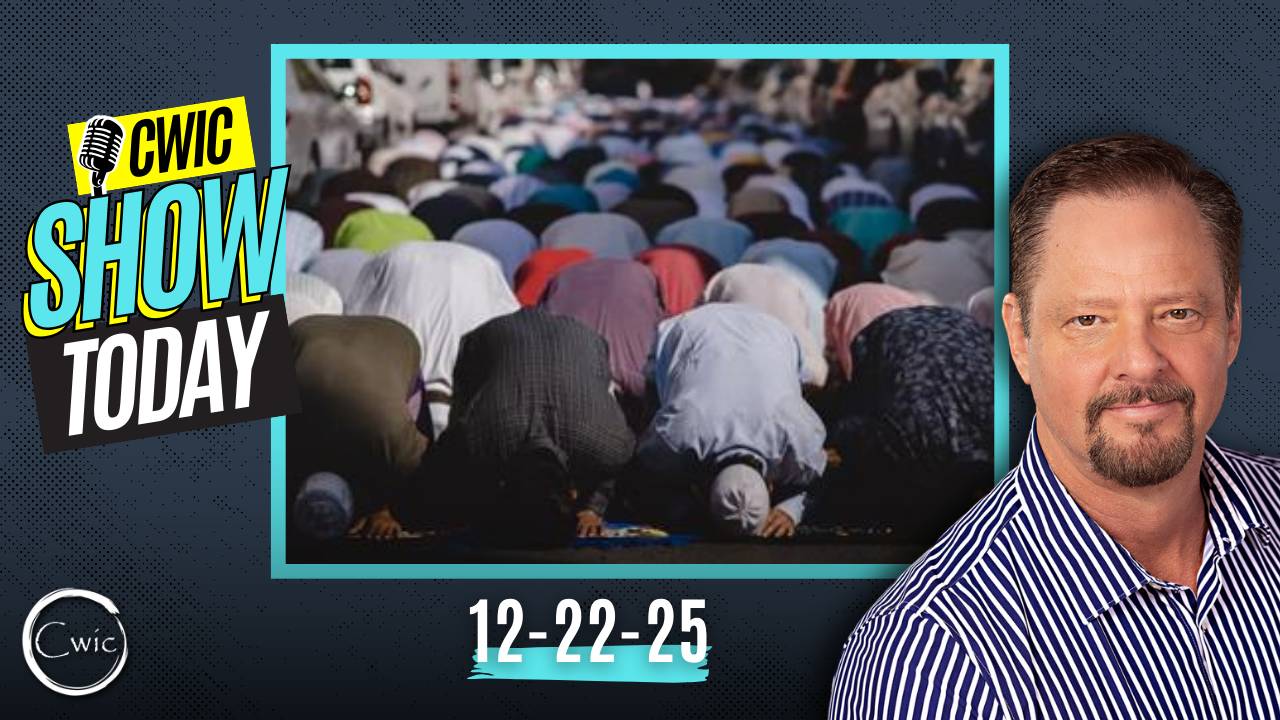
Tulsi Gabbard warns of Islamism. What is the dividing line between Muslims generally and Islamism? What does the Book of Mormon say about religious freedom and Sharia Law? Why doctrine, even in Primary songs is important. Jacob Hansen has a week!
Raw Transcript
All right, welcome to Quick Show. Today we are covering in this episode for
December 22nd, 2025, Islamism, the infiltration into the
West. We're going to look at a nuanced view of this because you have to take a nuanced view of this. There are two
different sides to this. One is, uh, you know, don't be racist, don't be a religious bigot. The other side is well
a number of these individuals which is true are coming in with a an agenda of
pushing Sharia law. Essentially this is those that are usually associated with the Muslim Brotherhood. Uh there are two
different types of Muslims than I would say in the west. I know a number of these individuals. Uh I know a number of
them in the Middle East. So, I want to talk about this a little bit and look at this from a Christian Latter-day Saint
point of view involving the Book of Mormon as well into law and how to set
up a civilization and run a civilization. We should be using these principles when we look at this mass
immigration into the West. All right, so that's one thing I want to cover. The other thing I want to look at is the
change in the primary song when I am baptized. Uh it makes it more doctrally accurate
and I just want to cover this. This is an important thing to understand. It's the right thing to do. It's kind of like when people say, "Oh, you're changing
things as you go along here with the church as they go back and try to deconstruct church history." You can
even do that through primary songs, but this is the right thing to do. So, I want to cover that because it's an important doctrinal issue that is
changed and that we need to put up more on a pedestal than we maybe
are doing sometimes in our culture. So, we're going to cover that as well. This episode is brought to you by Gospel on
the Nile. Uh there are two trips coming up here in March 2026. So, just a few
months away and there are only a few seats left, but I think that this is something that if you have it on your
bucket list, if you'd like to do it, this is the time to do it. Uh March is a great month to go to Egypt. We're going
to go through numerous temples. You're going to see our temple, right? Our temple all over the walls of the
Egyptian temples. You're going to see incredible sites with in incredible condition, beautiful colors. We're going
to go to the pyramids. You can ride a Campbell. Uh just a lot of great things. And it's a great trip to go on. One of
my very favorites, if not my favorite trip that I do. Gospel on the Nile, March 3rd to 13th, 2026 and March 17th
to 27th. We'll see you there. And by the way, the link for that to find out more is in the
description box. One more thing I want to mention also is that many of you have not seen my Christmas series that I've
done. I've got six videos on the YouTube channel that cover Christmas. Uh, this
is something I did several years ago, so a lot of newer subscribers have never known about this or have never seen it.
You can also see that in the description box. Put some real context into what
we're really celebrating here at this time of year. Here we go.
[Music] Right. This past weekend was America
Fest. It is a conservative uh conference that was right here in
Phoenix. I had been invited from a couple of different sources. Uh I'm not really a party specific guy. I I don't
usually get involved with those things, but this would have been fascinating to go to. I wish I could have gone. You know why I didn't go? because it was
basically Jacob Hansen week last week and his debut from Rouslon's channel on
our Mormons Christian great video and then of course his debate against Joe Heshmire in Salt Lake where I was to
watch that. So I had already made that commitment and had several other meetings built around that those few
days that I was up in Salt Lake. But I had, you know, front row tickets here basically to this uh VIP tickets from a
couple of different sources. But I would have liked to have seen something here. This is something that was brought up.
It's it's a big headline right now, especially on the conservative side, but really it should be looked at by
everybody and how we're going to handle this and what we're going to do with a
consistent Islamist pressure in the West. Now, when I say Islamist, this is
really important to parse this out, right? is you've got Muslims and you've got Islamists. And Islamists are those that
would, you know, one of the dividing lines there would be are those that want to push Sharia law. They want to put
that in place in other countries where it doesn't currently exist. There are other characteristics there of what an
Islamist might be, but they're the fundamentalists. Some want to conquer by sword, some want to do it by
immigration, but they want to enforce Sharia law in those new areas. And it is
baffling to me. And obviously there are secret combinations we might say at at
work here, in the West, especially in the United Nations and in the European
Union and some in the US where you have politicians and other elites that are
willing to bring in mass immigration of of uh Muslims from, you know, Africa and
and from the Middle Eastern countries that
are not vetted very well, right? I have zero issue with immigration as far as a controlled immigration. I think that's a
good thing to have. Uh you want people to be able to participate in the American project if they're willing to
participate in the American project. I know several Muslims that are really
good people. They are grateful to be in America. They believe in in the principles of America and they're
they're great grateful that they can worship uh their god the way that they see it in America and and they they
participate in the in America as Americans as well. But there are some who are not and and those Islamists that
want to push Sharia law are a real problem because they're not just individuals that have a certain
ideology. This is a network of people in powerful positions that mostly are
involved with a Muslim Brotherhood and and and we and their entire goal is to
infiltrate the West and to push uh Islam, more specifically Sharia law into
the West and we don't seem to care about that. We don't seem to do anything about that. And the thing the problems that
you're having in Europe are because of this issue. You can see several people at times the there there are certain
Muslims that are going out in the middle of a street, shutting down streets as they get do their prayers uh you know in
the middle of the street without permit or without permission or anything else because they're trying to push this
agenda through. They're trying to force and say, "Hey, this is us. We are here and we are not going away and this is
what things are going to be like here going forward." Period. That is their approach.
And you you know again we have a a bumper sticker idea where we always want to
look at something all the way on one side and then all the way on the other. Well some people say well all Muslims then are bad. All Muslims participate in
this idea. That's not true. That is not true. Now are there a group of those
that might not be fundamentalists or are not Islamists that might go along with things?
Yes, there are certainly they they may not be the ones that are pushing it, but there are some that are willing to go
along with this type of thing. And then there are others that are fighting against it. They can't believe that that they they have to be a part of of a
label essentially that involves so much terrorism and and and so many, you know,
bad issues and they are upset about it, right? They you know you have the
example of the Muslim man in Australia who went out and risked his life to stop the terrorists in uh Bondai Beach right
and there are others like that and I know several of them both both here in the US and in the Middle East. I've got
a friend that I've interviewed from the UAE, right? Ahmed Sharif, who is a
younger man, educated, uh, and is out there trying to tell everybody, the West
is like, "What are you doing? What in the world are you doing? We have to deal with the Muslim Brotherhood here in the
Middle East. We know how to do this. We know how to shut them down. Why aren't
you doing this?" Right? Why are you allowing them to use your own laws to
infiltrate and to force problems? And and and that's what we're doing,
right? We are appeasing the fundamentalists and and allowing this mass immigration
without proper vetting and and and and then allowing the negative parts of of cultures. We
want to bring all the positive parts of all cultures to the west to the United States, right? We want bring you bring
your positive culture to us, but don't bring your negative. Don't bring the negatives. And and we are allowing all
of this, especially at the the political level, the politicians where
we're allowing a a you know, especially bringing so many young men into these
countries. That that's a real problem. A real real problem. And and we don't seem
to do anything about weighing that out. and okay, let's not bring, you know, three times as many men as we do women
and children into the country. That that's a stupid thing to do. Absolutely stupid when you understand demographics
and how things work with men and women, right? So anyway, here at this uh at the
turning point, Amfest uh Turning Point USA, Tulsi Gabbard gets up and talks a
little bit about this. Now, regardless of what you think of Tulsi Gabbard, um, yes, she's part of the Trump
administration. Some people don't like that. Uh, I what I'm going to do is I'm going to use a little portion of her
talk to use as a reference for what I'm going to go over here. Let's listen to
this, which issued a call to action to use American legal and political systems to
implement Sharia law. Okay. So, again here, don't just think of yourself, well, this is just some large
conservative group that's that's anti-Muslim and anti
uh that's racist or something like that, right? That that you can't just use that as a cover. You have to look at what is
happening with with these issues and how do you deal with it and how do you parse out
those that are pushing the Sharia law and those that want to participate in the West. There is a difference and we
have to look at that. Let's just keep going with this. They are working to implement in their
own governments these Islamic principles that are forced on people through the
use of laws or violence. The bottom line is this. When we talk about the threat of Islamism, this
political ideology, there is no such thing as individual freedom or liberty.
as Charlie said over okay so there's no such thing as as individual liberty and and and freedom
that that is true that is true and this is what I want to cover here this is an important thing to understand as a
difference we think here in the west that well everybody feels this way you want individual liberty you don't need
to be a part of a large collective necessarily and hold that up as the highest identity that you have and this
this is very different and in opposition to what We believe in the west is having
this individual liberty and the choice to do it. And this is an important thing to see as members of the church of Jesus
Christ of Latter-day Saints. We have a belief especially through the Book of
Mormon in individual liberty and and your the right to uh worship how we choose.
Here's the 11th article of faith, right, for the church. We claim the privilege
of worshiping Almighty God according to the dictates of our own conscience.
And here's the key. And allow all men the same privilege. That's the
pluralism. Let them worship how, where, or what
they may. Right? That is the belief of the church. that that is an article of
faith and it's an important part of how we move forward in the United States
with law. We believe in pluralism and we support it and we fight for it. Now,
furthermore, the Book of Mormon goes over this several times and and and
again, the Book of Mormon is a map for us in the last days. It's a map for us politically. It is a very political
book. It's a very political book. This whole idea of we'll keep politics out of theology. You can't. Yeah. Keep party
politics out. Keep candidate politics out. We can do that. But politics
itself, the issues that we're all struggling with within a society, you
can't keep that out of theology. That that's preposterous. The Book of Mormon is a very political book. It is a map
for how we ought to treat things. And here's what it says in Mosiah 27:1-4,
right? A very clear legal statement. It says, "And now it came to pass that King Mosiah caused that there should be a law
throughout all the land and that there should be no persecutions among them." Right? This was for his own people, his
own belief, for the church because others were persecuting the church.
Right? There was no law against a man's belief for it was strictly contrary to the
commands of God that there should be a law which should bring men onto unequal grounds. Now Sharia law is very
different from this. They allow other belief but you are going to be in a different cast a lower cast if you are
not Muslim. It's going to you know it it doesn't allow for the same thing. Continuing, it
says, "There was a strict command throughout all the churches that there should be no persecutions among them,
save it severe persecutions upon them who persecuted the church." So, there
are consequences for persecuting others. And it's not just the church here. It it's all religious for
persecuting them. Okay? Now, you're going to run into here's our conflict because that works on both sides of the
coin. We would believe in not persecuting Muslims, but the Muslims
believe in Sharia law. So they could claim, for example, oh, we we believe in this. You're not allowing
us to impose our own full legal belief system. Now,
of course, we wouldn't allow the law of Moses to be imposed either, right? As if we are all going to follow this. This is
what a lot of Christian nationalism is about. They they actually want to impose
Christian biblical law. Not just the idea of
freedom and liberty and agency, but actually the same consequences that you
find throughout even the Old Testament, which is very concerning. It's it gets rid of the pluralism. It puts people on
different grounds. So you have to fight as best you can to open up that system to allow for the freedom of worship as
best as you can. And and again, Sharia law does not allow
for that. And so even starting if you start seeing these little pockets coming up in in Europe where you've got areas
and entire cities that are being run now by Sharia law you you you've it's that's
a very big concern running different judicial systems within the own border
your own borders of your own country. Let's go on here because in the Book of Mormon this is all over the place. This is Alma 117. Now there was no law
against a man's belief. So we want to protect Muslims in their belief
for it was strictly contrary to the commands of God. Right? Look how look how the gospel how
God wants agency to be supreme as long as it is not causing uh detriment. You
know, you know, you can't just go out and murder. You can't go out and steal. You can't go out and harm,
right? But but a man's belief, you are able to go out and believe whatever you
want. Right? Now, if it says if he murdered, he was punished unto death. That was their law. It was capital
punishment. And if he robbed, he was also punished. And if he stole, he was punished. If he committed adultery, he
was punished. That was the law back then. And for all these wickednesses, they
were punished. Right? So, so the laws you're going to have the law of the land is going to be put in place and in that
law of the land there's going to be consequences if you break the law. That's how it should run. Again and
again with Korahore, the example of Korahore, again, there was no law against a man's belief. It was strictly
contrary to the commands of God. Elma goes on in Elma 30:11 to say, "Every man
had liberty to act for himself according to his will and pleasure or to believe
in whatever he chose." This is again the agency. Look at the example right from
the beginning in the account of Adam and Eve. Agency is supreme. Helaleman
14:30-31. Ye are free. Ye are permitted to act for yourselves. For behold, God hath given
unto you a knowledge, and he hath made you free. This is Samuel the Lammonite.
So, what you get here, a Sharia law on one side, and the Book of Mormon will say on the other, right? Number one, the
Book of Mormon is saying very clearly, believe whatever you want. Worship how
and where and what you want. Right? The law does not pun punish any belief.
Only actions that harm others are punished and forcing belief is
considered contrary to God. That is very different from what you get on that that
Sharia law side. Right now Sharia law does not demand that you have that you
believe in Islam, but it does put you into a different status,
a different legal status if you do not. If you're a m uh if you're a Muslim, you
have full legal membership with with the laws. If you are Christian or a Jew, the people of the book, then you're allowed
to worship privately, allowed to maintain religious institutions, but you're exempt from religious and and
you're and you're exempt from any Islamic religious duties. However, that's not what we see in practice in the Middle East. There are very few
places where you see Jewish and uh Christian places of worship. You can do
it in in your home maybe, but you know, I'm not sure how well that works out. Now, in Egypt, it's different. You've
got estimates anywhere from 10 to 20% of the population are Coptic Christians.
And they have churches all over the place. I mean, you can go throughout Egypt. This is not just in Cairo. This
is also going into upper Egypt or southern Egypt throughout where where you have a really strong concentration
of of of Coptic Christians. and you'll see a a Christian church right next to a mosque,
right? There's a little bit more of of leeway there than you find in most places. You used to see this a lot more in Lebanon
where there used to be such a a a high population of Christians
and even in Iraq and before that in Iran, you would have
you would have Jewish populations that were worshiping in synagogues. But
but lately that is not tolerated the way it used to be tolerated. And then if you
are purely secular, if you have no religion at all, if you're an atheist, a
polytheist, if you are an idoltor, right, then they you have hardly any
protection whatsoever in the law here, right? You are you're often required to to convert or you're going to face
violence. Uh it's it's that's what it is. That's what it is, right? So Sharia
is going to determine legal status based on your belief.
You are not equal before the law. The law enforce Sharia law enforces a religious hierarchy that affects you.
And the religion and state are inseparable. They're inseparable. So it's all you
mean you can go to the constitution, right? It is unc Sharia law is
inherently very anti-constitution
and this is what we have to look forward and this is what you need to look in
advance at to prevent it's hey welcome individuals here that
are vetted support them in their belief I support them in their belief remember a couple
of years ago you had the uh one of the chapels an LDS chapel was opened up for Muslim
worship. I I have no problem with that. Zero problem with that. I I think that's
the right thing to do and the right approach as long as you are not giving appeasement to Sharia law. Create a
bridge on relationship and tolerance of worshiping what you
believe in and build a wall on constitution, you know, for
constitutional pro around constitutional principles and around freedom of religion.
You can do both at the same time, right? you you can do that. If if that bridge
is weak because they're trying to break down the wall around the Constitution
and around freedom of religion, then it's weak and that bridge might go away. But that's the right approach. I love a
number of Muslims that I know, really, really good-hearted, good people. So,
you have to be able to parse it out. You have to be able to have compassion for individuals. You have to understand that
not everybody's like this. while still understanding the threat
that Islamism creates for the West. Okay, enough on that topic. We're going
to go to the next one, which is the Latter-day Saint primary song, When I Am
Baptized. Now, this is I'm going to bring this up here because I I I want to specifically go over
the lyrics that were changed here and and for me anyway, why I'm very excited
about this. I'm sure some people don't like that I'm excited. They don't like that these things are changed. Uh but I
think it's essential. Okay. So, here we see the song When I Am Baptized receives
lyric updated lyrics. Uh and it's for good reason. All right. Here's what the the changes are here.
Here are the updated lyrics. I like to look for rainbows whenever there is rain
and ponder on the beauty of the earth made clean again. Okay, so not not a big
change there, right? I want my life to be as clean as earth right after rain.
I want to be the best I can and live with God again. And now here's some changes here talking about okay adhering
to the covenant path and responsibility that we have and that even children
have. I know when I am baptized I choose that is new. I choose the
savior's way and I will be forgiven. Here is the stipulation
as I turn to him each day. That is beautiful. That is what needs to be
taught, right? So you're you're choosing the Savior's way. You are when you're
baptized, you're choosing the Savior's way and you're forgiven when you turn to
him each day. Or in other words, you're turning to him to be forgiven. And that's through repentance, obviously.
So you some people might say that these are changes that are not that big of a deal, but it shows you something, right?
For those that are afraid, for example, they're think that, you know, the brethren are at the highest levels, everything's going woke and etc, etc.
Look, those are usually cultural issues that people are having because of philosophies of men that are entering in
through our culture in the west right now. But at the highest levels, I I I am
all I always see that you you've got changes that are
made or you have teachings that are made in general conference that adhere to the
gospel against what the philosophies of men would teach that you choose the
Savior's way. You, it's up to you. And that in order to be forgiven for
something, you need to rely on repentance. See, we do believe in works.
We do believe in works. Don't get caught up into this idea that what you hear for like for from Pro Protestantism,
especially evangelicalism that are trying to say, "See, you believe in works and and then you kind
of go back and you defend this in a way." No, no, we we do believe in grace, though, too. We we believe in grace. And
it's like, yeah, we believe in grace. Of course, we believe in grace, but lean into your uniqueness. Lean into
the uniqueness of the gospel. Lean into these truths. Yes, it is about becoming.
The gospel is about becoming. And we become like Jesus Christ and our heavenly father through repentance,
through our choices, through what we think, what we say, and what we do.
lean into it because it's a beautiful truth about growth. It's a beautiful truth about
explaining suffering and opposition in the world and why it exists. And it actually adds strength and
resilience to children and adults when we understand that principle better. We
have such a a gem, such a pearl in the gospel. So to try and hide that light,
so to speak, under a bushel because you're afraid of being attacked in some way or some argument that you're trying
to appease makes absolutely zero sense. You have the truth. You have the pearl.
All right, last thing I want to cover is Jacob Hansen. He had a great week. Uh he's doing great things. I want to talk
a little bit about debating and and why this is a good thing. It's not my thing. I don't do debates.
But I'll I want to cover why I think that this is a good thing. Right? Jacob Hansen is from the channel Thoughtful
Faith. He's also got a Facebook page called Thoughtful Saints. Uh but he was on the very very popular Christian
YouTube channel called Rouslon KD. He spoke with Rouslon. The topic of the discussion was are Mormons Christian.
Jacob does a very good job of representing the thoughts of so many Latter-day Saints of of doctrine and of
the positions of of many Latter-day Saints. I'm not going to say he represents the church because he doesn't. None of us represent the
church. But I will say he represented very well. So this is a really big deal
that he's being asked to come on a Christian channel like this. I want you to think about that. That would never have happened just a couple of years
ago, a few years ago. Those types of things are changing. We had a debate
last Friday night between Jacob Hansen and Joe Heshmire of Shameless Papacy, a
channel of he's a Catholic theologian. We were inside of a Catholic church with
reportedly 800 people that purchased tickets. 800 people buying tickets on a
Friday night to go see a discussion and a debate on theology. Think about that.
That that's amazing. And so you had a a a a large large worship room in in the
Catholic Church that was full of Catholics and and Latter-day Saints, primarily a few evangelicals. And why is
this important to people? A lot of people say, "Well, you don't want to be contentious. This is not contentious."
There were some times where it was a little bit, you know, I'm not going to say heated, but a little spicy maybe in
terms of what was said on both sides about Joseph Smith or about the popes in
the past. But overall, it was it was a great event. And this is what it does. This is
what it does. Number one, Jacob has a seat at the table as a Latter-day Saint
that did not used to happen at all. And so he's got a seat at the table on many of these places and channels and debates
uh etc. Right? He went also on uh a few months back on pints with Aquinas and
and that's a large large Catholic channel as well. And so the these are
the these are really important things because he gets a seat at the table and most importantly it's not a matter of
winning. He's representing very very well. But what it is is it gets the
theology of the Latter-day Saints out there to people that don't ever hear it
except through regurgitation of anti- Mormon tropes.
And instead, you've got a Latter-day Saint clearly articulating beliefs and doctrine of Latter-day Saints. Hey, this
is well thought out. This is very interesting. This is not just some stupid crazy idea. They may not agree
with it, but instead of it being positioned and framed by others who do
not like what we have and are trying to gatekeep, you have a Latter-day Saint that is able
to articulate this and get this message out to individuals uh about the gospel and our doctrine and our beliefs, the
plan of salvation, our view on the Godhead versus the Trinity, uh our
belief and worship in Jesus Christ that you would not have ever had for that
would not exist in any any other way. So for those of you that say, "Well, this is contentious and you should never,"
that's not true. It isn't true. It is a great way to get the message out there
about what Latter-day Saints believe. It's a It's a way, a way of getting the
gospel, the restored gospel of Jesus Christ to others that would never otherwise hear it. So, harra for Jacob
and what he's doing. I really enjoyed the event on Friday night. There was another one, a smaller one on Thursday
night. But again, the point is get the message out there and we need to stop
suffering from the spiral of silence on our own beliefs and lean into them and
express them and get them out there to the world. Thanks for listening.

"I Take This Every Day!"
Learn more about why I accepted Cardio Miracle as a sponsor and why I take it every day!
- Greg Matsen

Stay Connected With New Articles & All Things Cwic!

Cwic Audio Player
All of the Cwic Media podcast episodes on one page!
Recent Posts

